
Why Arts and Crafts are Good for Mental Health: Supporting Anxiety, ADHD, and Emotional Well-Being
I’ve always been a fan of arts and crafts. Ever since I was a child I could happily spend hours working on projects, sewing, painting, crocheting, you name it I probably enjoyed it. As an adult it became an important coping skill for managing anxiety in times of stress and symptoms of ADHD.
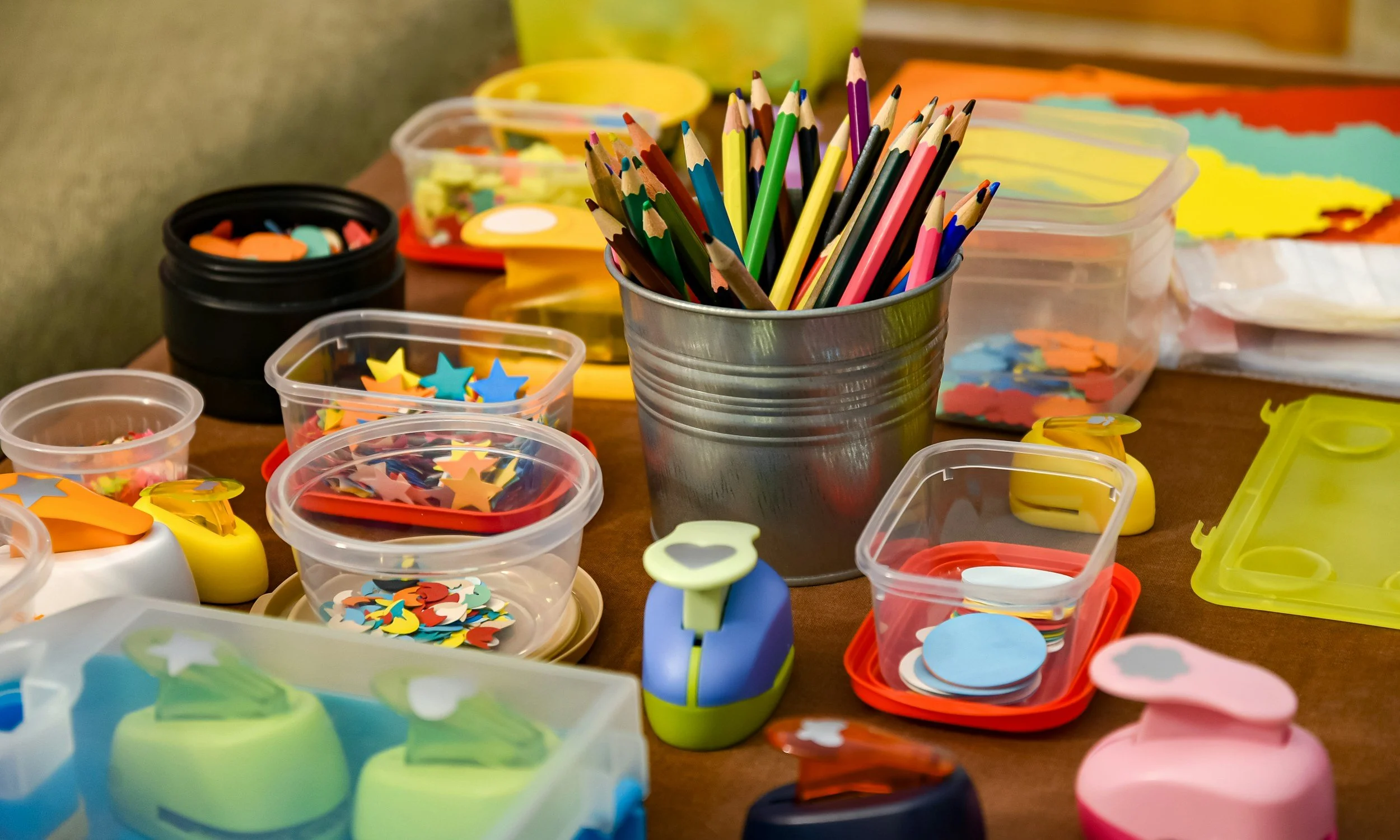
Even a small collection of basic art supplies can offer hours of creative activity.
Arts and Crafts for Mental Health
So why is it that crafts have always been so soothing to me? After a stressful busy day a simple 30 minutes of needlepoint leaves me feeling regulated, calm, and more able to connect, there must be some reason. Well, research has shown that creative activities can improve well-being, reduce stress, and support emotional regulation for children and adults.
When we engage in arts and crafts, the brain shifts attention away from anxious thoughts and toward the sensory and motor tasks involved in creating, helping the nervous system settle and making it easier to regulate emotions.
Managing Anxiety with Arts and Crafts
Anxiety often pulls our attention into the future. Our minds become consumed with "what if" thoughts, worries, and worst-case scenarios.
Creative activities naturally encourage us to focus on the present moment. Whether you're coloring, painting, knitting, building, or working on a craft project, your attention shifts to the task in front of you. This focused engagement can create a state often called "flow" or a feeling of being fully absorbed in an activity.
Research has found that arts-based interventions are associated with reductions in stress and improvements in emotional well-being. Creative activities appear to promote relaxation, provide a healthy distraction from anxious thoughts, and offer a sense of accomplishment that can boost your mood.
Many people also find that repetitive creative activities such as coloring, knitting, beading, or painting have a calming effect on the nervous system. When our hands are busy and our attention is focused, it can become easier for our bodies to settle and for anxious thoughts to quiet down

Taking time for creativity is a great way to practice self-care.
Managing ADHD Symptoms with Arts and Crafts
People with ADHD often spend much of their lives hearing about their challenges: difficulty paying attention, impulsivity, forgetfulness, or struggles with organization. Creative activities offer an opportunity to focus on strengths instead.
Research suggests that many individuals with ADHD demonstrate high levels of creativity and divergent thinking. Arts and crafts allow children and adults to explore ideas, experiment, and express themselves without worrying about finding the "right" answer.
Creative activities may also support skills that are often challenging for people with ADHD, including:
Sustaining attention on a task
Planning and sequencing steps
Problem-solving
Frustration tolerance
Emotional regulation
Fine motor coordination
For some children with ADHD, arts and crafts provide an ideal balance of structure and freedom. There are enough guidelines to keep them engaged while still allowing for creativity and self-expression.
Most importantly, many children experience success while creating. They can see their progress, feel proud of their work, and experience a sense of competence that may not always come easily in academic settings.
Arts and Crafts offer more than just a creative outlet, they can be a powerful tool for supporting mental health.
Are you near Eden Prairie and looking for some good local art supply stores? Check out this blog post!
